
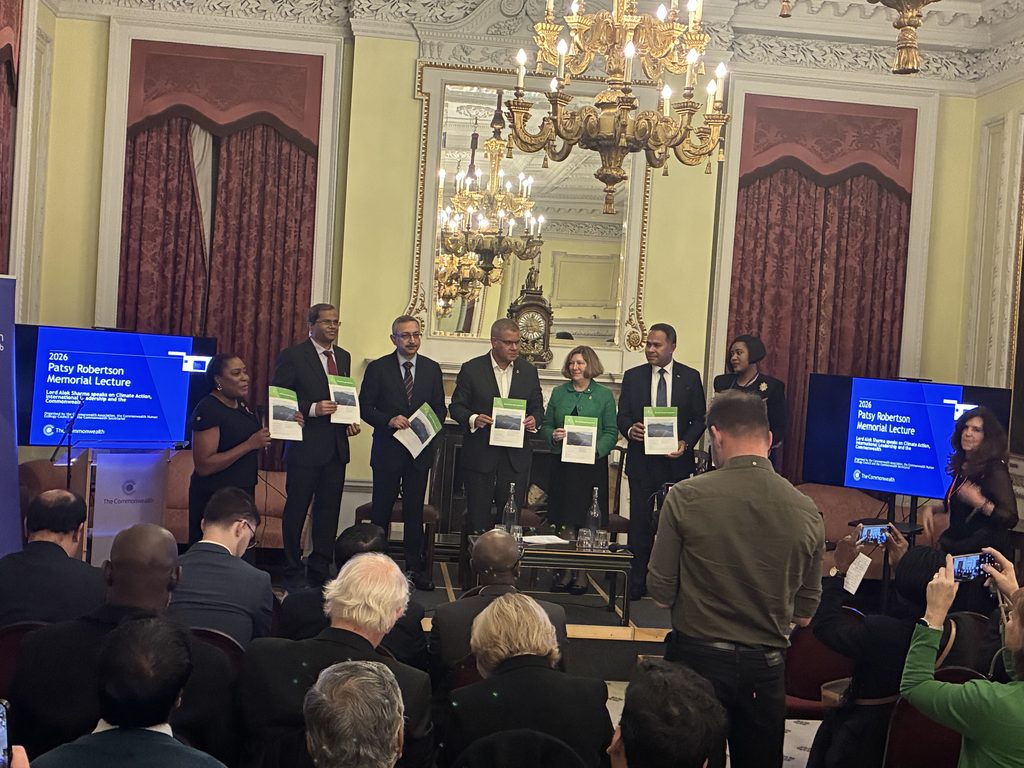
Yesterday I attended the Patsy Robertson Memorial Lecture at the The Commonwealth Secretariat as a member of the alumni association. The focus was on climate change, international development & cooperation.
It raised lots of questions for me as an observer. There was optimism, despite the parlous state of multilateral cooperation in the world today – that the forthcoming Commonwealth Heads of Government meeting next week might bring a coherence of messaging and commitments to tackle #climatechange among its 56 nations in Antigua & Barbuda.
Commonwealth countries make up a sizeable proportion of the world’s population. Speakers expressed hope for a stronger outcome at the #COP31 in Antalya, Turkiye taking place a week later.
Lord Alok Sharma KCMG PC – keynote speaker – spoke about COP26 – his role as Chair – and what it had achieved. More commitments secured, yes, but without the finance, not much can be achieved. Besides the generic messages & mention of institutions and financing instruments using acronyms, there was some granularity from representatives of different countries. For example, the importance of preserving the ocean by small island developing states in the Caribbean and Pacific, initiatives to tackle water harvesting, climate-related poverty and migration in low income countries in Africa. Australia will chair the COP this year – unlike previous events where the host country has been the Chair – symbolising a different type of multilateral cooperation.
The ComSec shared its own programme & plan of action (pictured) – strengthening resilience, accelerating mitigation, improving access to climate finance and practical, inclusive climate action. Nothing to disagree with there. But … will it happen? What will change in practice? In these chandelier-filled rooms, with important people ‘at the table’, how will consensus be formed when country and regional interests diverge so radically?
The age-old question of the role that the Commonwealth could and should play was uppermost in my mind. In theory, a club of nations that include rich and poor, with commitments to democracy and the rule of law is a good start. But its impact and role continually disappoint – for many reasons.
I was the only person (and the only woman) to raise her hand and ask speakers to comment on the social impacts – including labour rights violations in the global supply chains of solar panels, critical mineral extraction and battery production. No-one responded. That’s not OK. Why are human rights continually ignored in goal-setting on climate change? They’re not binary objectives!
I hope the leaders at COP will give some thought to the thousands of workers dying from heatstroke; the homeworkers losing their home and livelihoods from flooding; the communities and workers impacted by exploitation, loss of land and pollution from mineral extraction, battery and solar panel production, to name a few.
It’s time for a viable Just Transition.