
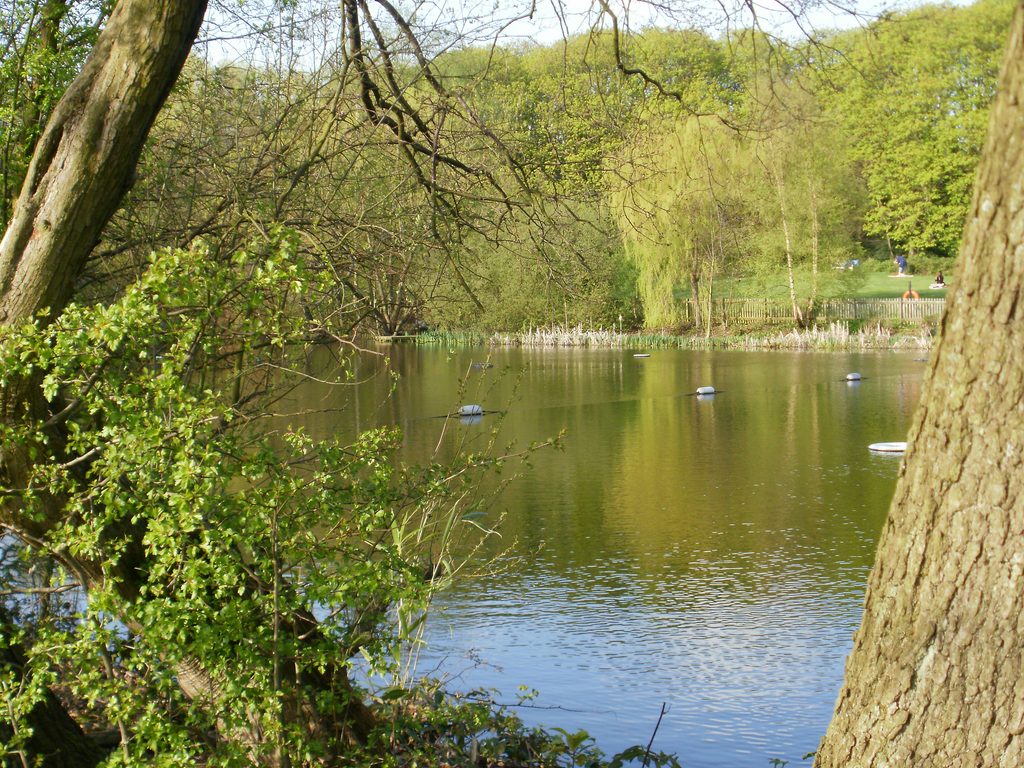
Swimming in cold, open water is a slightly mad thing to do. When I plunge into cold water throughout the year, my family think it’s more than a bit mad. But it’s exhilirating and transformative. Immersed in the velvety sensation of the water, especially when it’s cold, brings a state of one-ness: you are forced to be in the present moment – the mind, body and spirit connected. There is evidence showing the mental health benefits as a way to help manage loss, trauma, anxiety, depression, exhaustion. People say that when in the water – even if it’s only for a few minutes, they get a break from it all, and emerge somewhat transformed – ready to face the day ahead, one breath at a time.
Last Sunday, I joined a group of women in Hampstead Heath in London as part of the of the celebrations of the 100th Anniversary of the Kenwood Ladies Pond. Shivering and chattering, we swam in three different ponds and walked between them. The head lifeguard – an extraordinary woman – led the walk. She set the scene with three ropes for us to collectively weave of green, purple and white. She wanted us to make the link between our experience, the suffragette movement and other actions led by women around water.
The Kenwood Ladies Pond opened to women and girls in June 1926. It is a beautiful sheltered place – surrounded by trees – one of very few women’s ponds in the world. It is fiercely loved by thousands of women who are privileged to enjoy it – including me. It is open every day of the year, and the heroic lifeguards turn up – no matter what – in all weathers. Last Sunday, the process of undressing, plunging in the water, shivering while drying off and dressing, marching up and down hills in the icy wind, and doing it all over again three times took some energy and resilience, but didn’t deter us. We ended with hot mugs of tea and shared food. It was a special experience that has stayed with me.
On the walk, I learnt about an extraordinary woman, Josephine Mandamin, an Anishinaabe elder from Wiikwemkoong on Manitoulin Island in Ontario. For years she walked thousands of miles around the Great Lakes carrying a copper pail of water in one hand and a staff in the other. Her purpose was to draw attention to the importance of clean water and its preservation. People living around the Lakes are being poisoned by chemicals and pollution, impacting their health and their livelihoods. She said, “The world has a duty to protect our Mother Earth and her life blood — our life blood — the water.” Protecting water is a responsibility rooted in her peoples’ teachings about the role of women as life-givers. She felt it was her duty “to pass on the knowledge and understanding of water, to all people, not just Anishinabe people, but people of all colors.”
Our walk on Hampstead Heath included circling what is believed to be a resting place of Queen Boudica. She was a queen of an ancient British Iceni tribe who led a failed uprising against the conquering forces of the Roman Empire in around AD 60. She is considered to be a British national heroine and a symbol of the struggle for justice and independence.
I didn’t realise it at the time, but swimming and walking last Sunday morning made me think about my book on embodied leadership and social change. It helped me make connections between the claiming of space, the importance of legal rights and social institutions that embed and advance those rights in our everyday practices. Those leading and participating in the campaigns for beautiful safe spaces for women to swim, for equal rights, and for safe healthy water resources – leave a legacy for us to build upon. They are amongst many other initiatives around the world that make change – often slow, unpredictable and challenging – to claim space, rights and freedom.
Freedom needs a place. It doesn’t come all at once, and it isn’t only written into law. It has to be lived, in bodies and places. Before we can fully take our place in public life, we have to be able to stand somewhere, move freely, and belong there without having to explain ourselves.
Social change leaders show up – physically, mentally, emotionally, in spirit with others. They build strong connections, communicate a clear vision and feasible path to achieve goals, have courage to challenge wrongs, and perseverence to keep going.
Emmeline Pankhurst, one of the most prominent leaders in the suffragette movement campaigned for an equal moral code for men and women, drawing on her experience of sexual exploitation and suffering in a workhouse. She expressed the wider ambition of women’s emancipation in 1912 when she said, “It is to free half the human race, and through that freedom to save the rest.”